

Last updated: 05/10/2026
On 29 September 2026, the White House published Executive Order 14434, "Inaugurating the Era of Super Intelligence", which directs US federal executive agencies to say "Super Intelligence" (SI) where they used to say "Artificial Intelligence" (AI). For a business in Singapore or Australia, the short version is that almost nothing changes today: the legal definition is the same, existing contracts are untouched and private companies are not bound. What follows is what the order actually says, why the White House says it did it, who supports and opposes it, and the few practical steps worth taking if you sell to, partner with or follow guidance from the US government. Every fact below was checked against the original documents on 5 October 2026.
What the order says
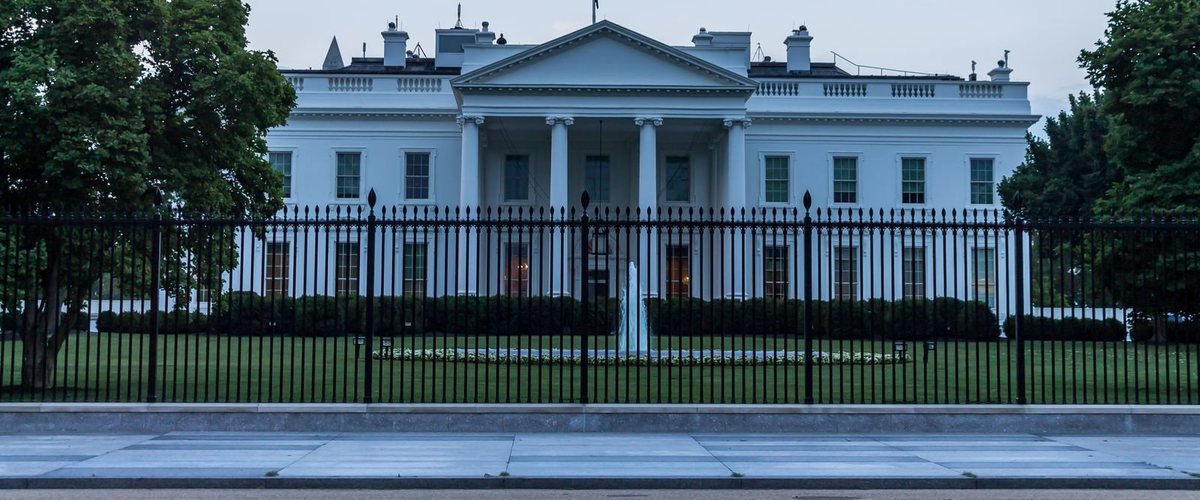
Executive Order 14434 is a short, four-section document whose operative rule is a vocabulary change for the US federal executive branch. Section 1 sets the policy: "to the maximum extent permitted by law, the executive branch shall use the terms 'Super Intelligence' and 'SI' in place of 'Artificial Intelligence' and 'AI' and will not acknowledge the usage of 'Artificial Intelligence' and 'AI' in any applicable setting". Section 2 turns that into instructions for agencies. Section 3 deals with the definition. Section 4 carries the standard general provisions, including that the order does not "create any right or benefit, substantive or procedural, enforceable at law or in equity".
The signed text sits in the Presidential Actions section of whitehouse.gov, next to a fact sheet released the same day. The official version appeared in the Federal Register on Friday 2 October 2026, Vol. 91, No. 190, starting at page 63129. The Federal Register's own website blocks automated access, so we cite the identical PDF on govinfo.gov, where the header reads "Executive Order 14434 of September 29, 2026".
The order arrived on the same day as a separate, voluntary document. According to CNBC, after a White House lunch six technology executives signed a two-page "White House Accord on Super Intelligence": Sundar Pichai (Google), Elon Musk, Dario Amodei (Anthropic), Mark Zuckerberg (Meta), Greg Brockman (OpenAI) and Jensen Huang (Nvidia). CNBC notes that the accord "makes no declaration about a name change"; the new term appears only in its title. Keep the two apart. The executive order binds federal agencies. The accord is a voluntary pledge between companies and the White House.
| Item | What the order says |
|---|---|
| Title and number | Executive Order 14434, Inaugurating the Era of Super Intelligence |
| Signed | 29 September 2026, by President Donald J. Trump |
| Official publication | Federal Register Vol. 91, No. 190, 2 October 2026, page 63129 |
| Who it binds | Departments and agencies of the federal executive branch (Section 2(a)) |
| Documents in scope | Official correspondence, public communications, websites, reports, policy documents and other non-statutory documents |
| No change required | Previously issued regulations, Presidential actions, contracts, grants and other historical documents (Section 2(b)) |
| Definition of SI | The systems covered by "artificial intelligence" in 15 U.S.C. 9401(3) (Section 3(a)) |
| Next step | Within 60 days, the Assistant to the President for Science and Technology proposes legislative language for a new federal definition (Section 3(b)) |
| Enforceable rights | None created (Section 4(c)) |
What SI means, and why it is not superintelligence
In this order, "Super Intelligence" is a new label for exactly the same set of systems the US already calls artificial intelligence; it does not describe a new class of technology. Section 3(a) says that "Super Intelligence" and "SI" mean "the technologies and systems encompassed by the term 'artificial intelligence' as defined in section 9401(3) of title 15, United States Code", and that this definition governs "unless and until superseded by subsequent Presidential action consistent with applicable law or by an Act of Congress".
That borrowed definition is broad. As printed in 15 U.S.C. 9401 on Cornell's Legal Information Institute, artificial intelligence "means a machine-based system that can, for a given set of human-defined objectives, make predictions, recommendations or decisions influencing real or virtual environments". A product recommendation engine and a credit-scoring model fit that description as comfortably as a large language model does. The law firm HWG draws the obvious conclusion: "The order therefore does not limit SI to systems that exceed human intelligence."
The trouble is that "superintelligence" already means something specific in the field. The San Francisco Standard quotes AI researcher David Krueger: "Superintelligence is already a word, and it means something different than AI; specifically, AI that is vastly superhuman and so very difficult, if not impossible, to control." The same article notes that Meta has used the term since June 2025, when it named its AI team "Meta Superintelligence Labs". So the same two words now carry two meanings: in US federal documents, everything that counts as AI today; among researchers, a hypothetical future capability well beyond human level.
For anyone writing contracts, policies or marketing copy, that ambiguity matters. A sentence such as "our product uses SI" reads very differently to a procurement officer in Washington and to a risk committee in Singapore. In this article we use "SI" only when we mean the US government's term, and "AI" everywhere else.
| Term | Who uses it | What it covers | Legal status in the US |
|---|---|---|---|
| Artificial Intelligence (AI) | US federal law, state law, industry, most other countries | Machine-based systems that make predictions, recommendations or decisions for human-defined objectives | Statutory definition in 15 U.S.C. 9401(3), unchanged |
| Super Intelligence (SI) | US federal executive branch, from 29 September 2026 | Currently exactly the same systems as AI above (Section 3(a)) | Administrative term; a new statutory definition is to be proposed within 60 days |
| Superintelligence (one word) | Researchers and some AI labs | Hypothetical AI far beyond human ability in most domains | No statutory definition |
Why the White House says it made the change
The official reason is that the word "artificial" no longer describes what the technology can do. Section 1 of the order says the technologies pioneered by American innovators "far exceed what was envisioned when the term 'Artificial Intelligence' first came into use", and that "the capabilities of today's frontier systems do much more" than imitate or automate parts of human intelligence.
The fact sheet adds a national-leadership argument: "The United States is the birthplace of Artificial Intelligence and is pushing this frontier forward, having led the world in its development and deployment for over 70 years since its inception as a field of research." It also lists earlier programmes, now described in the new vocabulary, including "more than $5 billion for the Genesis Mission, a national effort to harness Super Intelligence to accelerate breakthroughs in science, medicine, energy, and manufacturing".
Press coverage has focused on the political timing. CNBC describes the order as "a forced rebrand for an industry he has tightly embraced even as Americans grow increasingly wary about the rapidly advancing tech", and notes that it "comes weeks before the midterm election". The same report cites a Quinnipiac University poll, released that afternoon, in which 25% of respondents approved of the President's handling of AI and 58% disapproved. The official rationale talks about capability; the press talks about politics. The two readings are not mutually exclusive, and the order's legal effect is the same either way.

Who has to use SI, and who does not
Only departments and agencies of the US federal executive branch are told to use SI. Congress, the courts, US states, private companies and other countries are outside the order. Even inside the executive branch, the obligation is limited to non-statutory documents and is qualified twice by "to the maximum extent permitted by law", so where a statute says "artificial intelligence", agencies still follow the statute.
Section 2(b) is the sentence most businesses need: "Nothing in this section requires the alteration of previously issued regulations, Presidential actions, contracts, grants, or other historical documents." The privacy and AI governance association IAPP summarises it this way: "The immediate change is linguistic, not a wholesale rewrite of U.S. laws governing AI." HWG is more direct: "The order itself does not require private organizations to adopt the terminology or change their products, contracts, or compliance programs."
Some agencies moved quickly. When we checked on 5 October 2026, CISA, the US Cybersecurity and Infrastructure Security Agency, had a "Super Intelligence" topic page stating that "DHS plays a critical role in ensuring Super Intelligence (SI) security nationwide". The change is not uniform, though. The NIST AI Risk Management Framework page still uses "AI RMF" and lists documents under the title "Artificial Intelligence Risk Management Framework". That is consistent with Section 2(b): titles of documents already issued do not have to change.
California has gone the other way. On 30 September 2026, Governor Newsom signed Executive Order N-10-26, which orders that "All agencies and departments subject to my authority shall refer to Artificial Intelligence and AI as 'Artificial Intelligence' and 'AI,' notwithstanding any rebranded or different terminology used by the federal government, unless inconsistent with the law." A company dealing with both federal and Californian agencies will now meet two names for the same technology.
| Item | Switched to SI? | Basis |
|---|---|---|
| New federal agency correspondence, websites, reports | Yes, to the extent permitted by law | Section 2(a) |
| Regulations, contracts and grants already issued | Not required | Section 2(b) |
| Statutory definition in 15 U.S.C. 9401(3) | No, until new legislation or Presidential action | Section 3(a) |
| California state agencies | No; ordered to keep "AI" | California EO N-10-26, 30 September 2026 |
| Private companies, including vendors | Not required | HWG, IAPP analysis |
| CISA topic page | Renamed "Super Intelligence" | cisa.gov, checked 05/10/2026 |
| NIST AI RMF | Still "AI RMF" | nist.gov, checked 05/10/2026 |
Reactions: supporters, critics and the tech industry
Reaction has split along predictable lines: supporters see a signal of US ambition in the technology race, critics say a new name does nothing about risk and adds confusion. We report both sides as they appear in the sources, without taking a view on who is right.
Supporters. The San Francisco Standard reports that David Sacks, the President's former AI and crypto czar, "celebrated the accord", and that physicist Guillaume Verdon, "one of the loudest voices in accelerationism", "expressed support for the term change". On the commercial side, Business Standard reports that Elon Musk "confirmed the change in a post on X" to rename SpaceX's AI arm, SpaceXAI, as SpaceXSI.
Critics. Senator Mark Warner, vice chairman of the Senate Intelligence Committee, said in a statement quoted by CNBC: "changing what we call artificial intelligence does nothing to address the very real risks that come with increasingly powerful AI systems." California's order goes further in its preamble, arguing that "purporting to change something's name cannot distract a person of normal intelligence" from what it calls a failure to address "well-documented emerging security and safety risks".
The industry: cautious. The San Francisco Standard describes reactions in Silicon Valley as "mixed" and notes that "the leading labs have not relabeled their models as SI". It also records Elon Musk catching himself mid-speech at the White House event, "SI, pardon me", and then going back to calling it AI later the same day. Freshfields points out that "the accord does not expressly require signatories to adopt the Administration's rebranding" and does not itself create legally enforceable obligations.
One detail has been widely shared. Snopes rated as "True" the claim that the White House misspelled "United States" as "Unites States" in the accord. The error is in the voluntary accord, not in the executive order printed in the Federal Register.
What it means for vendors and international businesses
For now the impact is administrative: US agencies change the wording on new documents, vendors to the US government will see SI in solicitations, and businesses outside the US have very little to do. Real legal impact only arrives if a new statutory definition of SI is proposed and adopted.
If you sell to US federal agencies, Freshfields advises that contractors, grant applicants and companies filing regulatory comments "should expect and prepare for agency solicitations, forms, and official correspondence to adopt the 'Super Intelligence' nomenclature going forward". The firm also warns that "any statutory definition of 'Super Intelligence' could shape the scope of future federal incentives, export controls, oversight, compliance obligations, government-contract requirements", and possibly how existing AI-related statutory and contractual provisions are read. That is why the 60-day proposal is more important than the name itself.
If you work with US partners, IAPP names the practical problem: organisations will have to "manage two vocabularies that may refer to the same systems in some settings but not necessarily in every legal or operational context". Federal agency materials will say SI; US federal statutes, state law, contracts, vendor questionnaires and most governance frameworks still say AI.
If you rely on US security guidance, expect titles and links to move. CISA's own site now shows both names for the same document, as the Australian example below shows. Teams that cite US guidance in policies, audit evidence or training material should record both the old and new titles so the trail still makes sense to an auditor next year.
Singapore and Australia still say AI
Neither Singapore nor Australia has followed the US. Both governments continue to use "AI" in their own frameworks, and the US order has no effect on their law.
Singapore. On 22 January 2026, the Ministry of Digital Development and Information announced at the World Economic Forum that "Singapore Launches New Model AI Governance Framework for Agentic AI". Developed by IMDA, the framework "builds upon the governance foundations of MGF for AI, which was introduced in 2020", and guides organisations across four dimensions, starting with "assessing and bounding the risks upfront". For a Singapore business, obligations come from Singapore's own frameworks and laws, such as the Personal Data Protection Act, which we covered in mobile app security and PDPA compliance. What the US federal government calls the technology does not change any of them.
Australia. The clearest illustration of the "two vocabularies" problem involves an Australian agency. On 1 May 2026, CISA announced that it, the Australian Signals Directorate's Australian Cyber Security Centre (ASD's ACSC) and other partners had published "Careful Adoption of Agentic Artificial Intelligence (AI) Services", a joint guide. That news release still uses the original title. CISA's resource page for the same guide is now titled "Careful Adoption of Agentic SI Services" and describes it as guidance "on adopting agentic super intelligence (SI) systems". Same document, same Australian co-author, two names on one US website. An Australian organisation that cites this guide in its risk register should list both titles.
| Your situation | Suggested action | Priority |
|---|---|---|
| You bid for US federal contracts or grants | Expect "SI" in solicitations; state in bids that AI and SI refer to the same systems; track the proposed statutory definition due within 60 days | High |
| You have US customers or partners | Check clauses that define AI "as defined under US law"; prefer functional definitions in new contracts | Medium |
| You follow CISA or NIST guidance | Record old and new titles and links in policies and audit evidence | Low |
| You operate only in Singapore or Australia | Keep using "AI" as your own laws and frameworks do | No change needed |
Contracts and internal policies: what to do
The sensible approach is not to rewrite documents already in use, but to add one definitions clause to new contracts and policies stating that "AI" and "SI" refer to the same group of technologies. The order does not require businesses to change their wording, and it has not yet changed the statutory definition, so a hasty find-and-replace adds risk instead of removing it.
A well-drafted contract defines its subject by what it does, not by its label. If your contract already defines an "AI system" functionally, for example as a machine-based system that makes predictions or recommendations, the US relabelling does not change its scope. The risk sits in clauses that define the term by pointing at an outside text that can change, such as "AI as defined under applicable US federal law". If a new SI definition is adopted that is wider or narrower than today's, the meaning of that clause could move with it. This is general information, not legal advice; for a specific contract, ask a lawyer in the relevant jurisdiction.
Our view: the name changes, the data questions do not
Whether it is called AI or SI, the questions a business has to answer are the same: where does our data go, who can read it, and whose infrastructure runs the model. Executive Order 14434 changes a label in US federal documents. It does not change how a language model reads your documents, and it does not change your obligations under Singapore or Australian data protection law.
The episode does show a risk that rarely gets discussed. A business that depends entirely on AI services hosted in another country is exposed to that country's policy changes, whether they are a matter of wording, as here, or the deeper changes to definitions and export controls that Freshfields warns could follow. A business that runs open models on its own machines, with data that never leaves the office, controls most of those variables itself. That is the idea behind our private AI platform: open models licensed for commercial use, running on hardware in your office, at a fixed price agreed after a free assessment.
Executive Order 14434 of 29 September 2026 makes US federal executive agencies call AI "Super Intelligence", but it does not change the statutory definition, does not require existing contracts to be amended and does not bind private companies; for businesses in Singapore and Australia the legal term is still AI, and the date to watch is the proposed federal definition of SI due within 60 days.
This article summarises public documents and news reports for general information and is not legal advice. federalregister.gov blocks automated access, so the Federal Register is cited via govinfo.gov. Some Australian government websites did not respond when we checked on 05/10/2026, so the Australian example is cited from CISA's site.
Sources
- The White House: Executive Order 14434, Inaugurating the Era of Super Intelligence, 29 September 2026.
- The White House: Fact Sheet: President Donald J. Trump Inaugurates the Era of Super Intelligence, 29 September 2026.
- Federal Register Vol. 91, No. 190, page 63129: PDF on govinfo.gov, 2 October 2026.
- Cornell Legal Information Institute: 15 U.S.C. § 9401, Definitions, checked 05/10/2026.
- CISA: Super Intelligence topic page; Careful Adoption of Agentic SI Services; CISA, US and International Partners Release Guide to Secure Adoption of Agentic AI (1 May 2026), checked 05/10/2026.
- NIST: AI Risk Management Framework, checked 05/10/2026.
- State of California: Executive Order N-10-26 (PDF), 30 September 2026.
- Singapore Ministry of Digital Development and Information: Singapore Launches New Model AI Governance Framework for Agentic AI, 22 January 2026.
- Freshfields: Trump Executive Order Mandates Shift to "Super Intelligence", checked 05/10/2026.
- HWG LLP: Trump Replaces AI with Super Intelligence in the Executive Branch, 1 October 2026.
- IAPP: AI by any other name? White House directs federal agencies to enter the era of "super intelligence", checked 05/10/2026.
- CNBC: Trump tries to rename AI "super intelligence", 29 September 2026.
- The San Francisco Standard: Trump wants to rebrand AI "Super intelligence." Will Silicon Valley play along?, 1 October 2026.
- Business Standard: Elon Musk to rename SpaceX AI arm SpaceXSI after Trump's directive, checked 05/10/2026.
- Snopes: White House misspelled United States in "super intelligence" accord, checked 05/10/2026.